RAMS Digital
Guided Inspection
Machines that go and look at the parts of your building nobody checks.
Different machines.
Same idea inside.
Sensors to see, a brain to decide what matters, and a map to put every finding in its place.
Start with the one that hurts.
The racking nobody can see the top of, or the slab nobody has ever looked under.
RAMS Digital
Guided Inspection
Machines that go and look at the parts of your building nobody checks.
Every bay, not a sample Nobody working at height Findings on your own plan
The things that never move are the ones nobody checks.
Racking and floors are the biggest fixed assets in the building. Today they’re inspected in pieces — a clipboard here, a count there, a survey every few years — and nothing ever joins up.
Inspection is a sample
Racking gets walked an aisle at a time, from the ground. Floors get cored in a few places and guessed at in between.
Every bay and every stretch of floor, not a sample.
The top levels go unseen
Above head height, labels can’t be read and damage can’t be seen. Checking means a man-up truck, an operator and a closed aisle.
Read from the air, with nobody working at height.
Nobody has seen the slab
Reinforcement, cables and voids sit under the surface. The first sign is usually a crack — or a drill hitting something it shouldn’t.
Radar looks underneath before it becomes a repair.
Findings without a place
“Damage somewhere in aisle C” starts a search, not a fix. And a report nobody can find the bay for doesn’t get acted on.
Every finding lands on your plan, with a picture.
Cameras watch what moves. Guided Inspection goes and looks at what doesn’t.
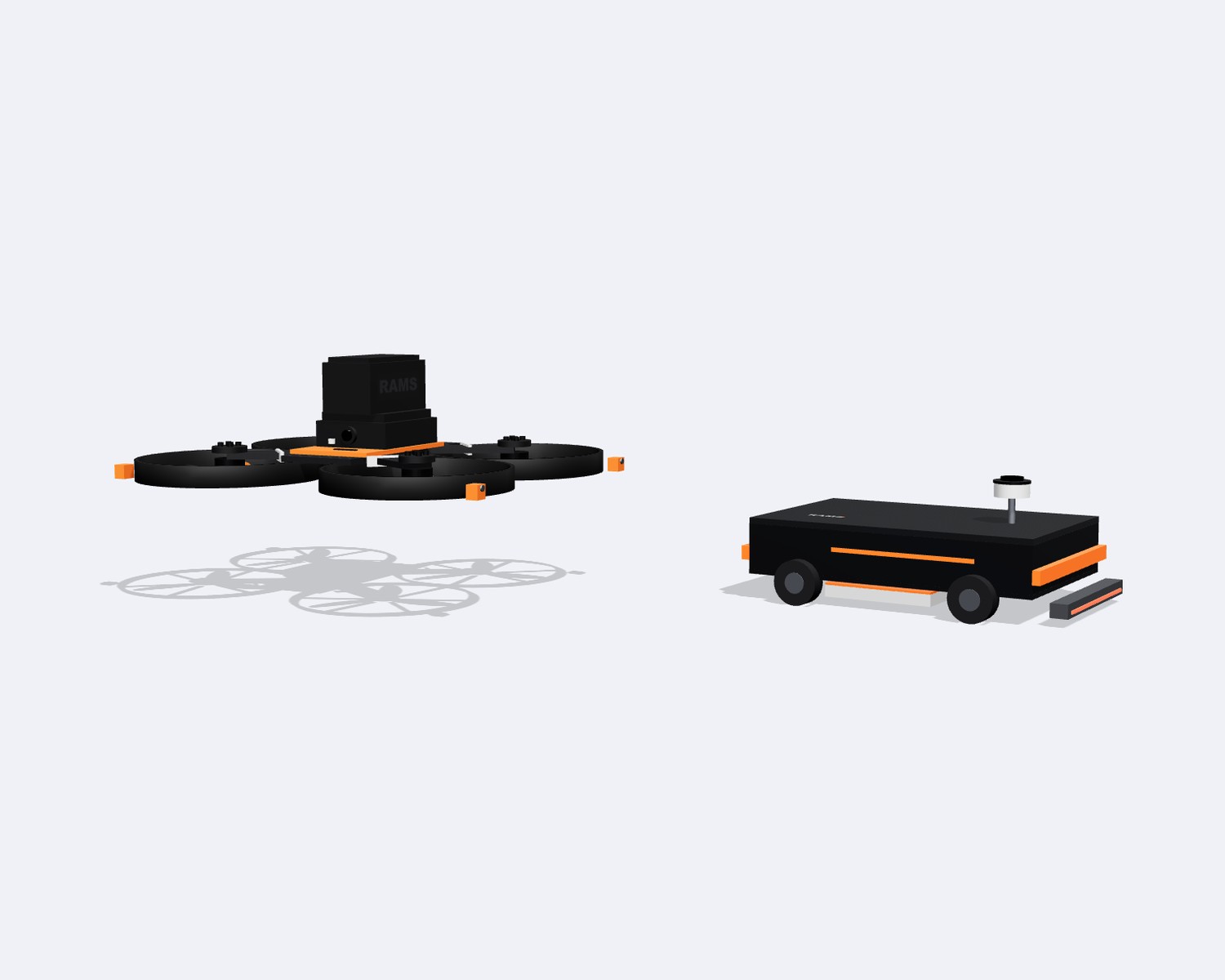
Two machines.
One marked-up building.
One goes up the racking, one goes down into the floor. Both run on their own when the building is quiet, and both hand back the same thing: your plan, with every problem pinned to it.
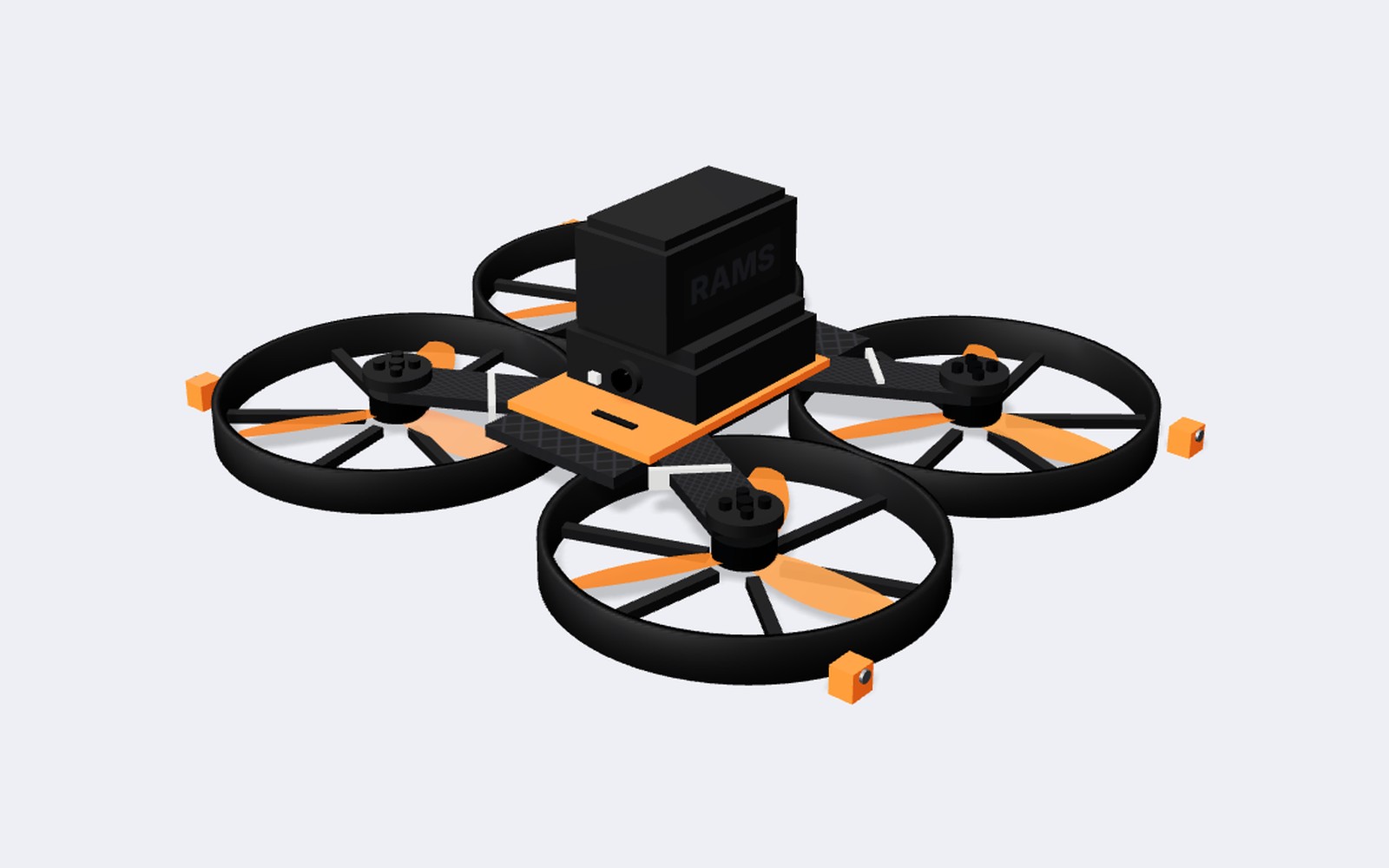
↑ Drone rack scanning
AirScanPilot
Up the rack face.A drone that flies the aisles out of hours and reads every bay, at every level — no reach truck, no cage, nobody at height.
Best forRack audits, stock counts and high-bay racking
- Reads location and pallet labels at every level
- Checks uprights for plumb, and grades a dent by severity
- Finds free space, and bays that don’t match the system
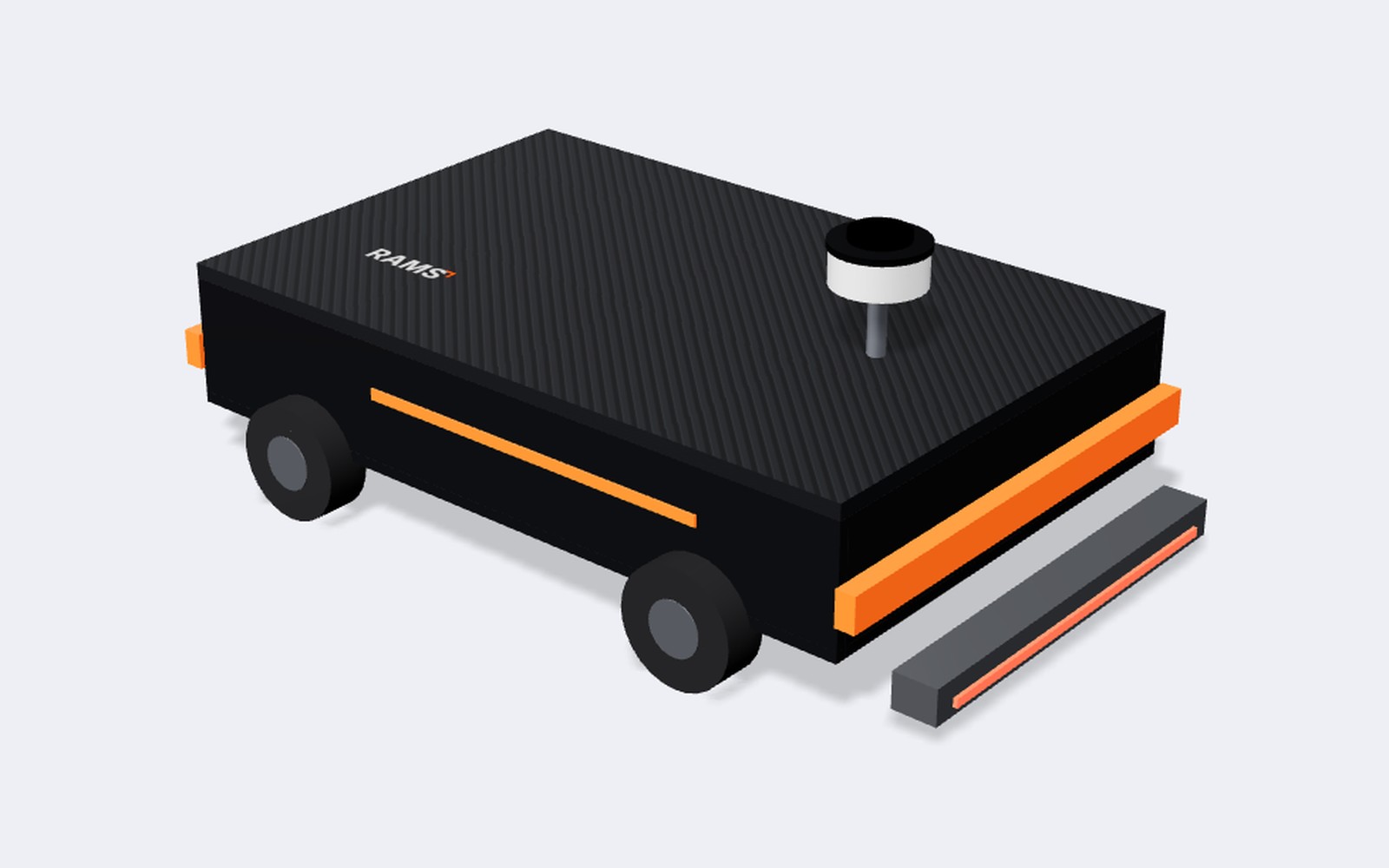
↓ Floor-level inspection
FloorScanPilot
Down into the slab.A floor robot with ground-penetrating radar that finds the voids and soft ground under your slab, before they become settlement.
Best forVoids and settlement, ageing floors and automation readiness
- Finds voids and washouts under the slab, ranked worst first
- Maps reinforcement, post-tension cables, conduit and drains
- Reads flatness, cracks and joint damage along every aisle
Take one apart.
Pick a machine to see what it’s made of — or watch it at work, on a rack face and over a slab. Drag to turn it around.
AirScan
A guard round every prop, a camera on the nose that looks at the rack face, and the brain and battery stacked on one plate.
It climbs the rack face bay by bay. Blue is what it reads — labels, notices, free positions. Orange is what it flags — damage, unsafe loads and stock in the wrong place.
What do you need to know?
Two quick questions. We’ll show which machine answers them — and because both are still being shaped, your answers tell us what to build first.
Your machine appears here.
Tell us what’s on your floor to get started.
Both machines are at concept stage. Sending this doesn’t order anything — it tells us which problems matter most.
Side by side.
| Feature | | |
|---|---|---|
| Best for | Rack audits, stock counts and high-bay racking | Voids and settlement, ageing floors and automation readiness |
| Where it looks | Up and down the rack face, at every level | Along the floor, and down into the slab beneath it |
| How it gets there | Flies the aisle | Drives the floor |
| What it reads | Location and pallet labels, load notices, what’s in each bay | What’s under the slab first, then reinforcement and services, then the surface |
| What it flags | Uprights out of plumb, dents graded by severity, stock in the wrong place, free space | Voids and soft ground, settlement, cables in the way, cracks and joints |
| When it runs | Out of hours, in a quiet building | Out of hours, in a quiet building |
| What you get back | Your rack plan, marked up and ranked | Your floor plan, marked up and ranked |
| Nobody at height | — | |
| Stage | Pilot | Pilot |
Buildings with more
up top and underneath.
Wherever racking runs high, stock moves fast, or the floor carries more than anyone planned for.
High-bay racking
Every level read, without a man-up truck or anyone working at height.
Before automation arrives
Know the floor is ready before the robots are.
Stock counts & audits
A count of what’s actually there, not what the system believes.
New racking & installs
Find the cables before the anchors go in.
Cold stores
Fewer hours for people in the cold, and a floor that’s watched.
3PL & shared sites
Evidence of what was in every bay, for every client.
Older, busier buildings
Settlement and voids found while they’re still cheap to fix.
Frequently asked questions.
Not yet. Neither has run in a customer’s building. What you can do today is tell us which building and which problem — the racking you can’t see the top of, or the slab you suspect is moving — and we’ll tell you honestly where we are with it. If you need an inspection done this quarter, we’ll say so and point you to a conventional survey.
What would you look at first?
The racking you sign off every year without really seeing, or the floor you’re about to put automation on. Tell us which one keeps you up.