Risk appears in a blind spot
A pedestrian can step into the path of a truck before the operator has any clear line of sight.
Detect the person, read the zone that was drawn there, and trigger the configured warning or action.
Introducing RAMS AI Vision — Intelligent Warehouse Perception
RAMS Digital
Industrial vision. Human intelligence.
On-device AI Event-based evidence Works with what you already run
On the truck, on the cell, above the doorway or over a hazard zone. The mounting position, the field of view and the rules are agreed during the site survey, so the camera watches the place where something actually goes wrong.
The picture is read on the device, so detection keeps working when the network doesn’t. What you get back is the event that matters, with its time and zone, not hours of footage to review. It runs off the truck battery or a panel supply, and is set up on site.
RAMS Digital
Industrial vision. Human intelligence.
On-device AI Event-based evidence Works with what you already run
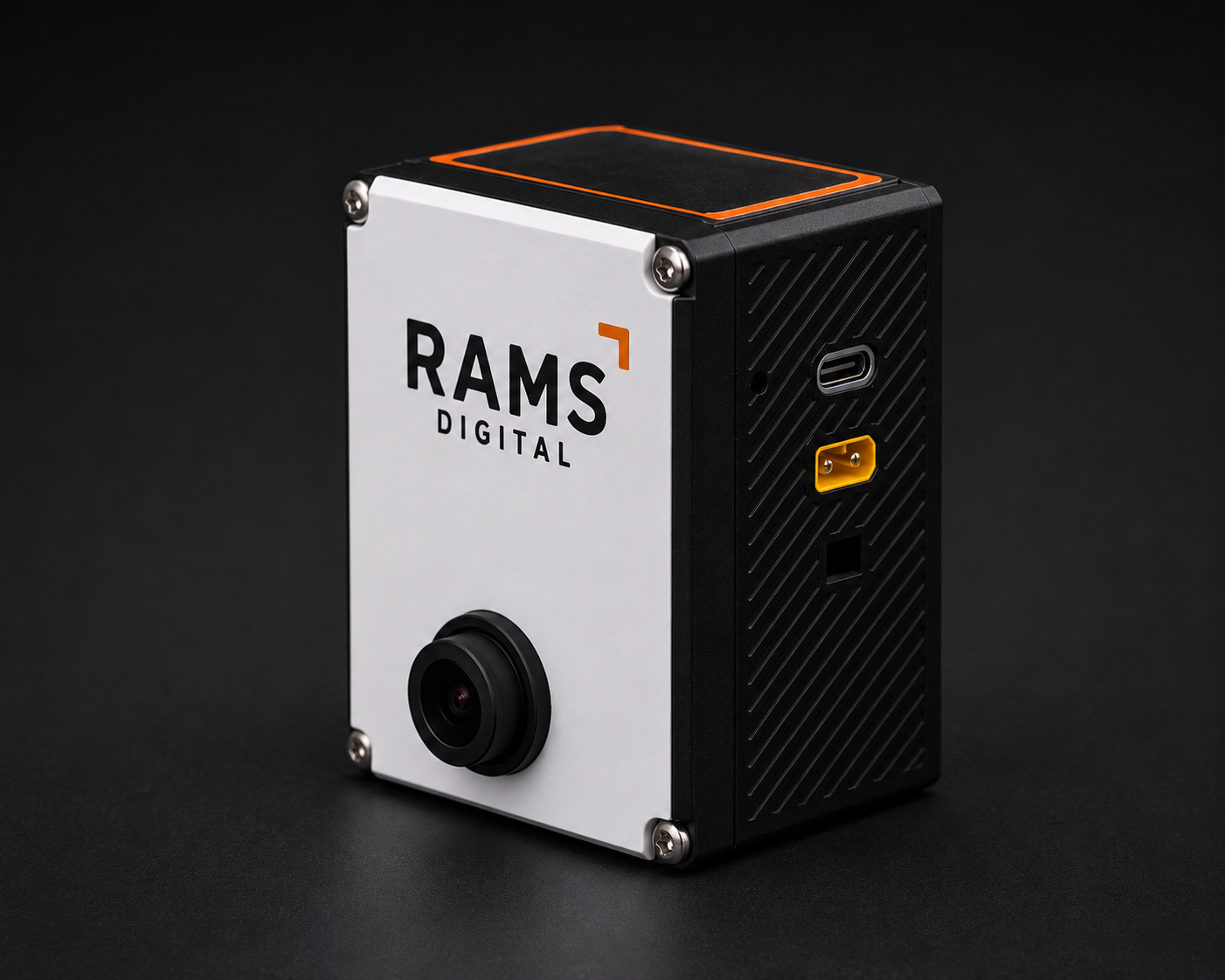
Traditional cameras are very good at keeping a record. The gap is the distance between something happening and anyone being able to act on it — and that distance is where incidents live. Four situations every floor knows, and what the camera does about each.
A pedestrian can step into the path of a truck before the operator has any clear line of sight.
Detect the person, read the zone that was drawn there, and trigger the configured warning or action.
A robot cell, press area or restricted zone gets entered for maintenance, clearing or a changeover.
Detect the entry, time-stamp it, and pass the event to the local response and the record.
PPE and walkway rules are hard to hold to consistently across every shift, on every aisle.
Monitor the rule continuously and create evidence the moment an exception occurs.
Hours of recording are rarely much use for the improvement you needed to make on the day.
Keep the event that matters, with its time, its zone and its operational context.
The same unit bolts to a truck, a fence post, a door frame or a ceiling drop. What changes is the zone you draw and the rule you give it.
Raked toward the floor, facing the direction of travel. It sees the person stepping out from behind the rack before the driver can.
Four places it already earns its keep. Each one is the same camera, the same edge AI — just a different line on the floor.
Cameras have watched factories for decades. This one understands what it is looking at, and does something about it before anyone reviews the footage.
People, PPE, vehicles, pallets and machines — picked out of every frame by the NPU inside the housing.
Where each thing is, where it is heading, and whether it is about to cross a line you drew.
A stop or slow signal, an alarm, a notification — and a clip of the moment, filed automatically, while the event is still happening.
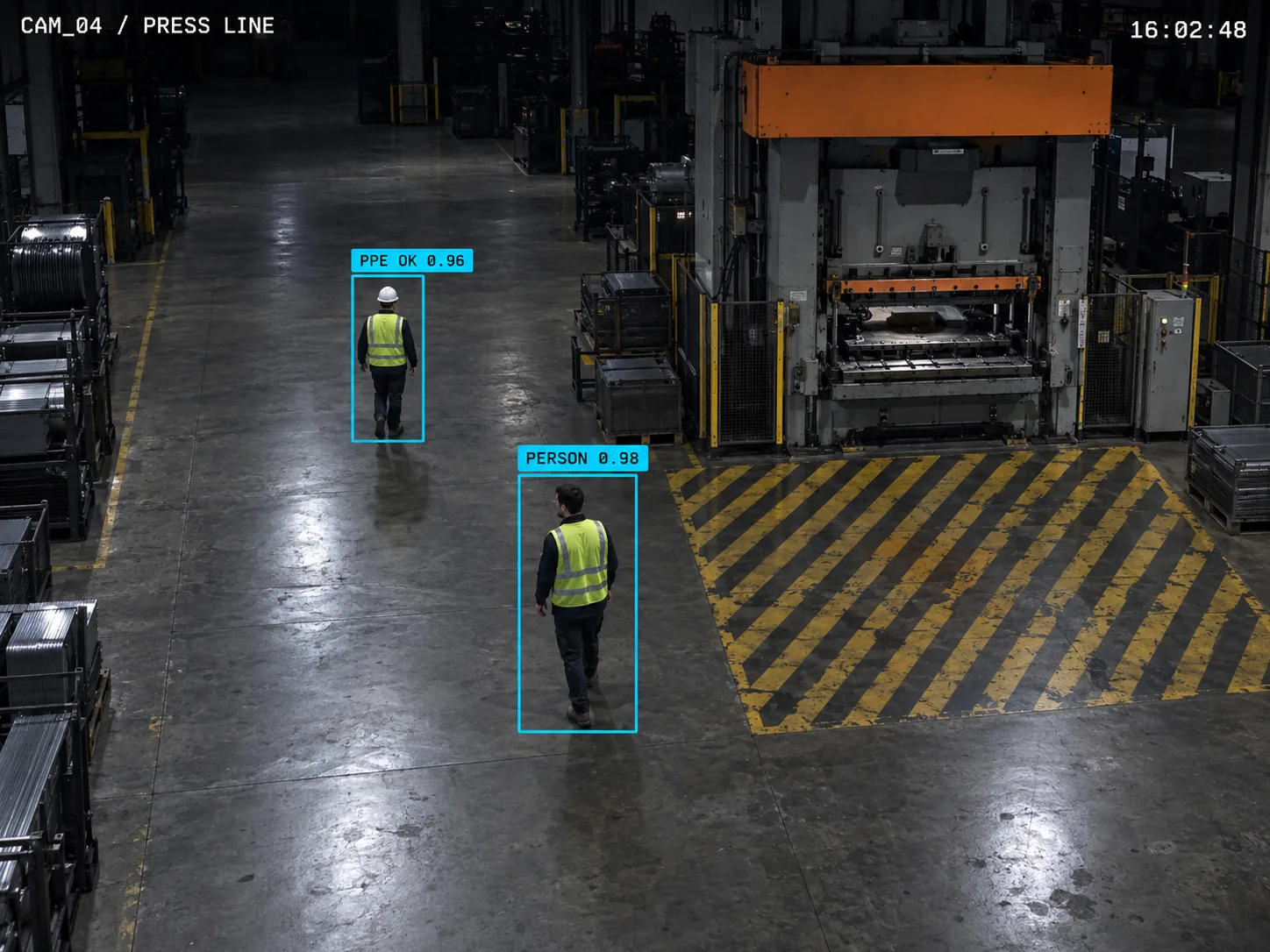
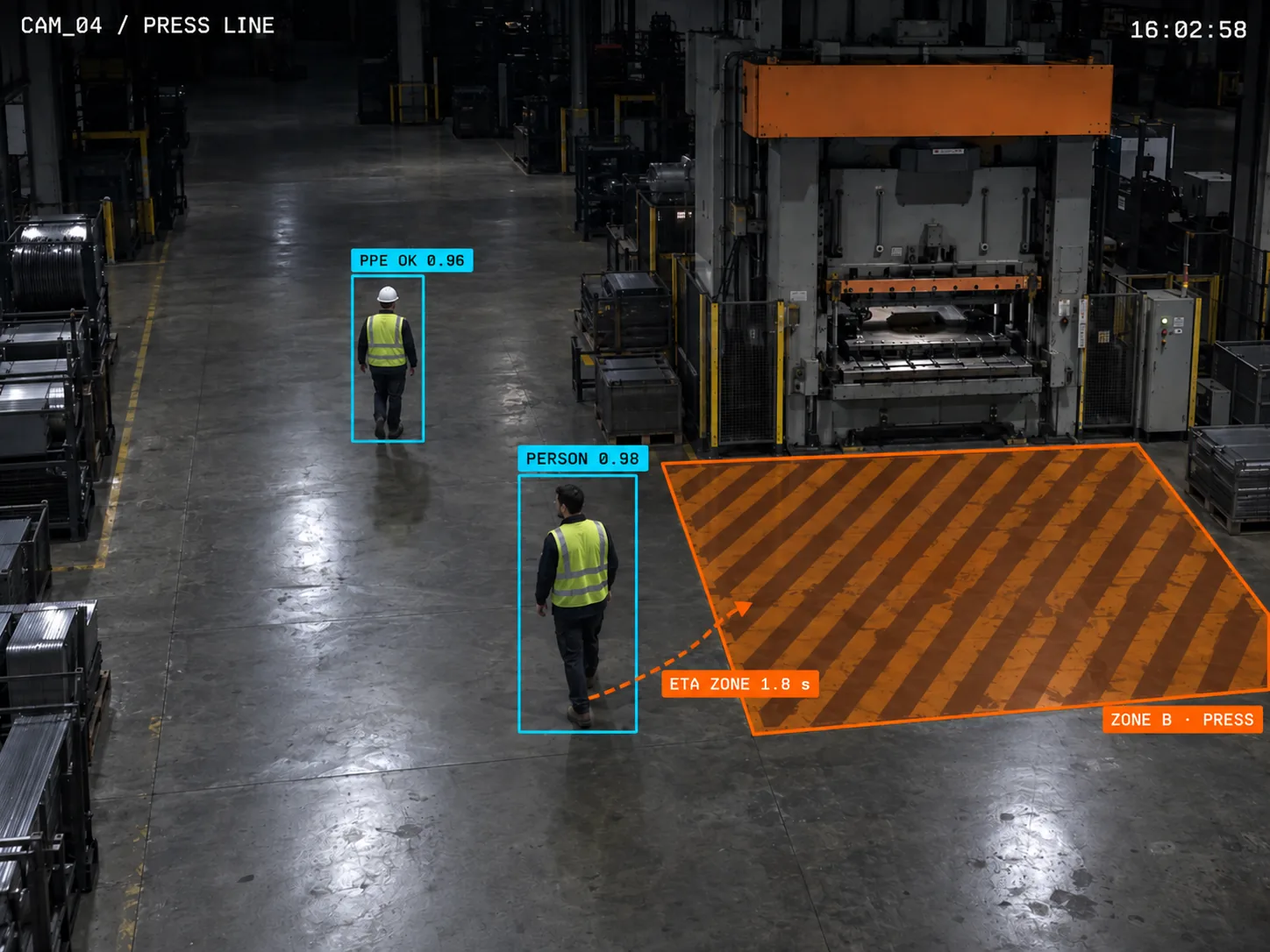
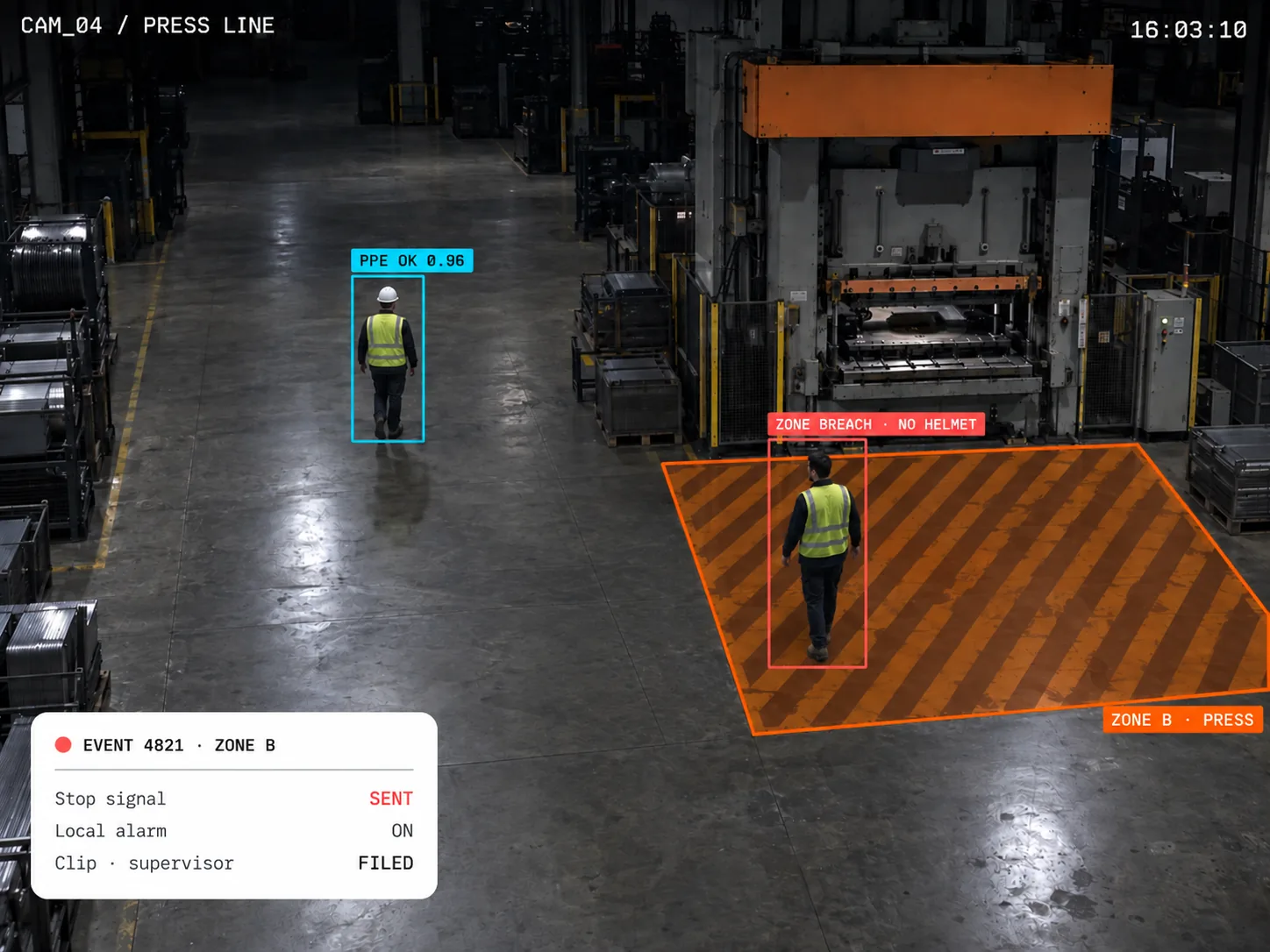
Operational safety cannot depend on a distant server and a perfect signal. Every decision is made on the camera itself; the network is for reporting afterwards, and losing it costs you the analytics, never the detection.
The image is interpreted on the device, instead of every frame being sent somewhere else for a decision to come back.
The useful output is the operational event and the context around it — not an endless stream of footage nobody will watch.
Zones and thresholds are commissioned around your actual floor, because a dock, a robot cell and a forklift aisle do not behave the same way.
Events synchronise to RAMS Digital for reporting, trends and cross-system intelligence — when there is a network, and not before.
Most use cases are a zone and a rule. If you can describe what should never happen on your floor, the camera can watch for it.
inference. Detects and decides without a network, and syncs events when it has one.
Set at commissioning, tuned from real events — not guessed.
Each camera runs on its own. Connected, they report to RAMS Digital, and individual events become trends — where they repeat, when they happen, and which areas have earned attention. The floor stops being anecdote and becomes something you can take to a safety review.
Interface shown is representative. Figures are illustrative until your own site data is collected.
No rip-and-replace. The camera mounts beside what you already have and takes power from what is already there.
One unit, one specification — whichever environment it is going into.
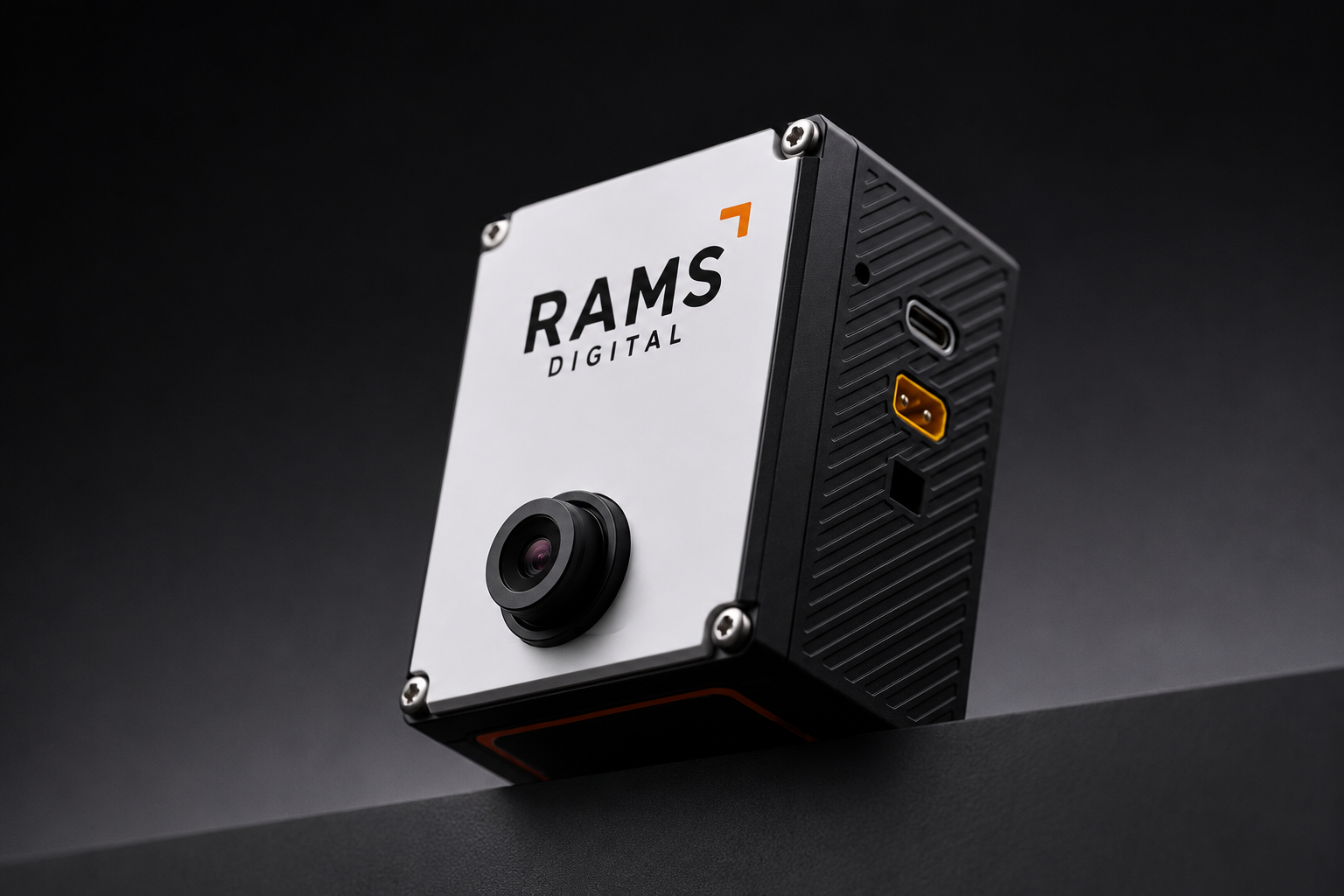
Figures reflect the published product claims on this page. Certification numbers, exact IP rating, dimensions and weight are to be confirmed against the final production unit.
Every safety control on your floor today is still there tomorrow. The camera sits on top of them and watches; it takes nothing away, and it is not certified to.
Detects, reads the zone, responds and keeps the evidence.
Where a camera is wired to a machine response, that integration and its failure behaviour are defined and validated for the specific application before it goes live.
The camera watches the floor, not the person. Continuous footage is never uploaded — it runs a rolling buffer on the device and only keeps the seconds around an actual event. Detection is anonymous: it classifies “person”, it does not identify who. Retention, who can open a clip, and what supervisors see are all set by you at commissioning, and we put that in writing before install.
A truck. A robot cell. A shared doorway. A hazard zone. We walk the operating environment, define what the camera needs to see, and show you how the event becomes a response you can use. You keep the survey either way.